Empowered LGBTI people

Social change starts with individual LGBTI people who no longer accept being marginalised but decide to take action. Individual stories raise public awareness and expose the level of exclusion in society. Empowered LGBTI individuals serve as role models for others, and their actions form important steps in the creation of LGBTI communities.

How do we think this works? Here are a few of our assumptions:
“Empowered LGBTI people experience less psychological pressure and stress, adopt healthier lifestyles and show less (sexual) risk behaviour” (Letter B in the graphic below)
“LGBTI people who are active in the public sphere are positive role models and lead to “normalisation” in the media and in public opinion” (Letter F in the graphic below)
“Professionals are best influenced through their peers who have already been sensitised: police officers through police officers, nurses through nurses, etc.” (Letter H in the graphic below)

Vietnam: WLW Art Exhibition

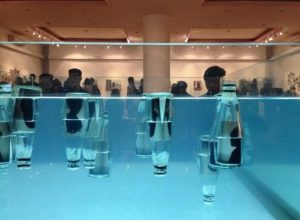
‘Exposure’ increases the visibility of WLW. In Hanoi, CSAGA organised an art exhibition called ‘Exposure’ about women-loving women (WLW). ...
2017

Central Asia: Changing the doctor

The doctor: From a door slammed shut to an open door. In a meeting between a doctor and an LGBTI organisation, the doctor had expressed that LGBTI patients ...
2017

Haiti: Front runners

Empowered front runners of Haiti at the roots of social change in Haiti. Community-based organisations come together in a COC workshop to create strong ...
2017

Tanzania: Queer Moslim faith

A queer moslim reconciles his heart with the Islamic faith. By following a workshop with peers, Salum Abdullah from Tanzania made a positive connection ...

Tanzania: Trans people parents

It is not a one-day process: Programmes engaging parents of transgender people. Mwamba Nyanda from Tanzania tells about the slow process of gaining understanding ...

Ethiopia: A strong message

A strong social-media message in hostile surroundings. An Ethiopian activist made an anonymous online statement ‘Hope’ using the Ethiopian national ...

Botswana: A comparison of urban and rural LGBT support

This LEGABIBO lessons learned assessment focuses on evaluating the effectiveness, efficiency, functionality and relevance of the LGBT support groups. The ...
2017

Zambia: All that lube!

‘What to do with all that lube?’ was Ntula Simwinga’s burning question. He works at the CFB Medical Centre and tells how he got involved ...
2016

South Africa: Anastacia’s story

Anastacia’s experience as a trans woman in South Africa.  A compelling story ‘Seeing it from the other side’ by Anastacia Tomson from ...

OUT’s Peer Education Programme for MSM / LGBT’s in

The OUT Peer Education Programme was initiated in January 2010 and is still going strong. The aim of the programme is to offer peer education to MSM (and ...
2016